
INDUSTRIAL HYGIENE | OCCUPATIONAL NOISE
Is Your Workplace Too Loud?
Find out when OSHA noise monitoring is needed—and why a quick decibel reading may not tell the whole story.
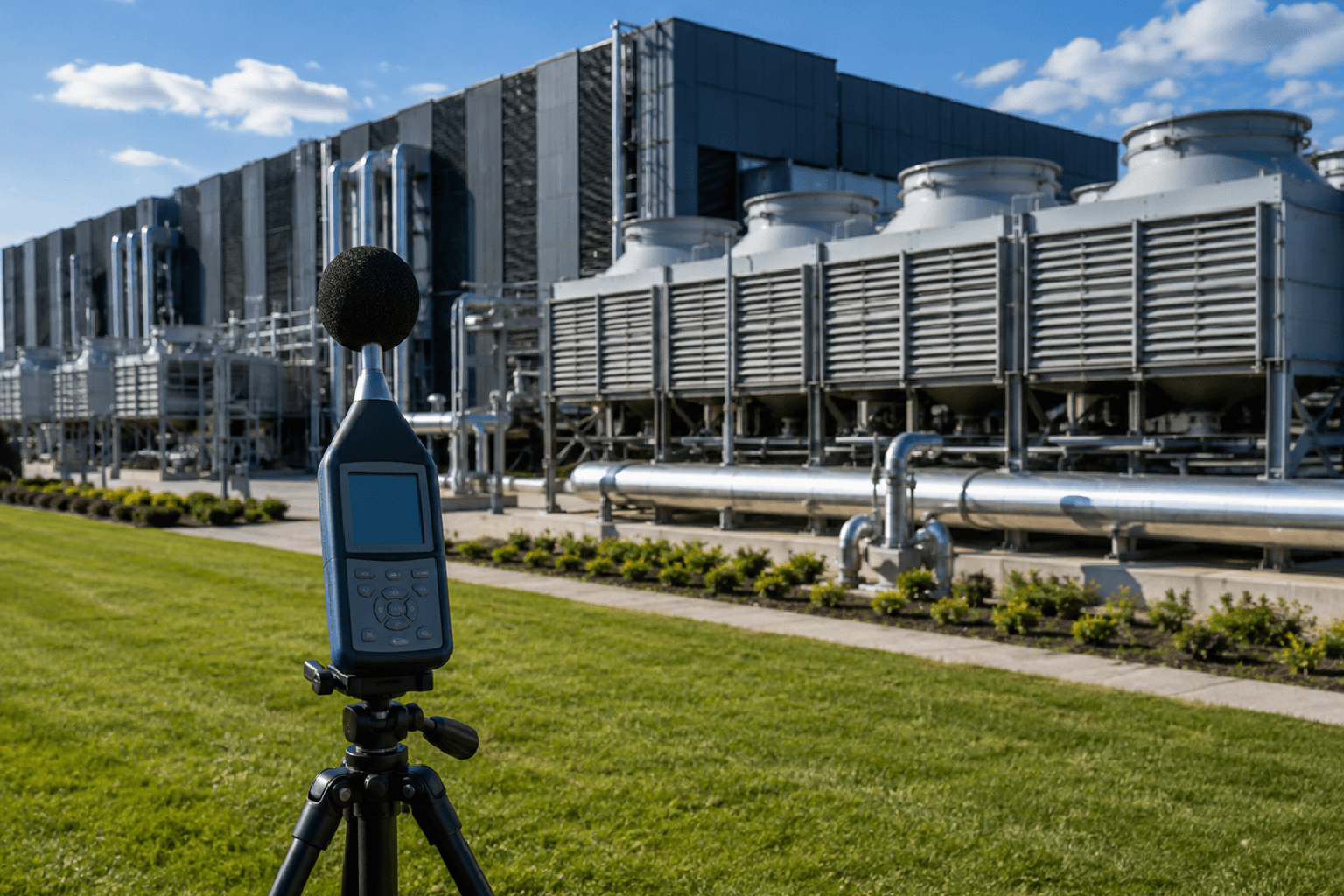
Can your employees work an entire shift around loud machinery without exceeding OSHA noise exposure criteria? A spot measurement alone cannot establish full-shift exposure.
A professional industrial hygiene noise survey connects measurements to the work employees actually perform.
OSHA Noise Exposure: Three Numbers to Know
| Criterion | Meaning under OSHA general industry rules |
|---|---|
| 85 dBA
8-hour TWA |
Hearing conservation action level |
| 90 dBA
8-hour TWA |
Permissible exposure limit (PEL) |
| 5 dB | OSHA exchange rate for exposure-duration calculations |
The 85 dBA action level and 90 dBA PEL are different criteria. OSHA measurement settings and the applicable industry standard matter.
Five Signs Your Facility May Need Noise Monitoring
- Employees regularly work around compressors, turbines, presses, grinders, or pneumatic tools.
- Workers must raise their voices to communicate nearby.
- New machinery or production changes have altered noise conditions.
- Employees rotate among noisy jobs or equipment cycles on and off.
- You need representative exposure data to evaluate hearing conservation obligations.
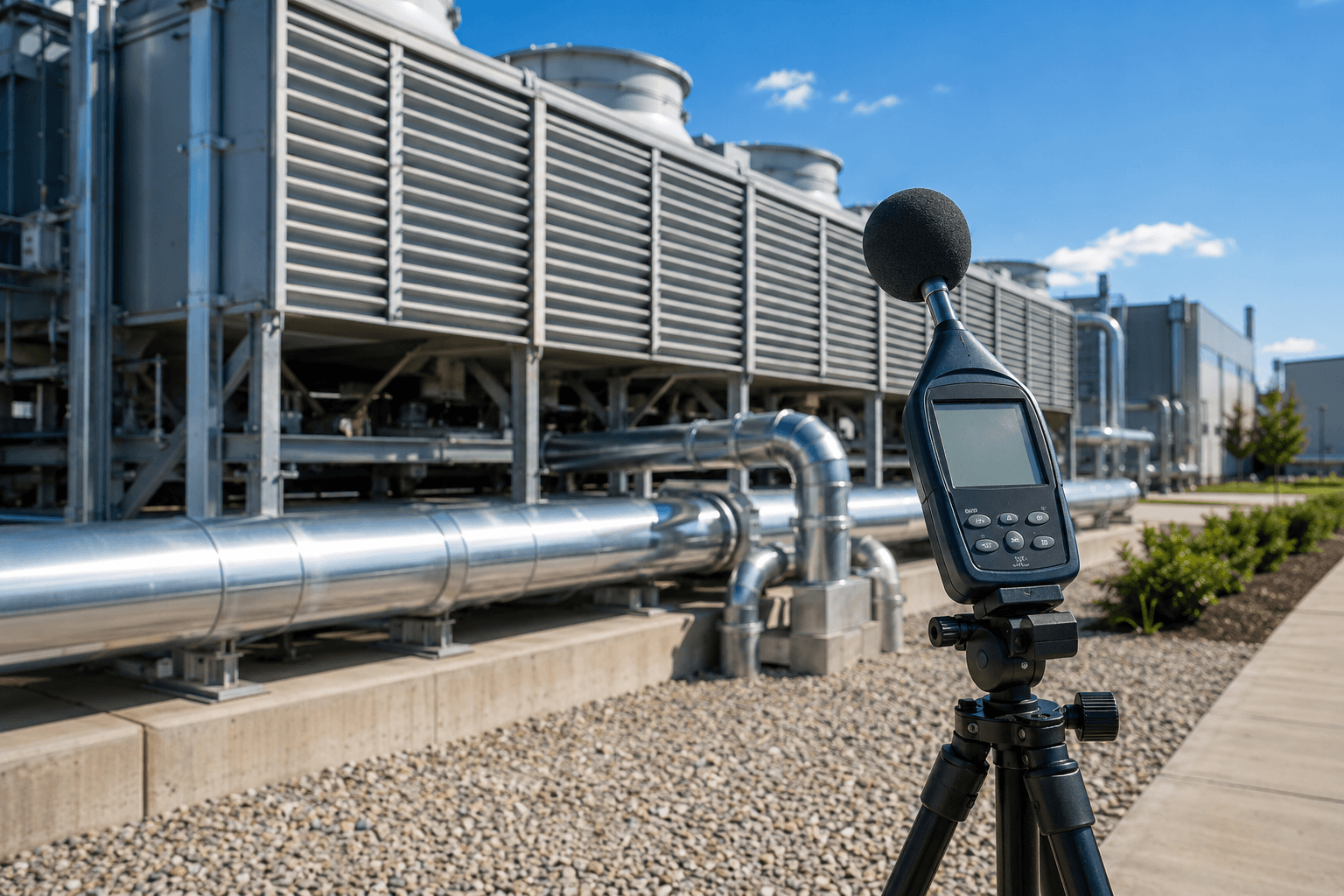
Sound-Level Meter vs. Personal Noise Dosimeter
Sound-level meters help identify noisy equipment and locations at a particular moment. Personal noise dosimeters integrate an employee’s exposure as tasks and noise levels change throughout the work period.
Full-shift dosimetry is often essential when employees move among workstations.
What a Professional Noise Survey Should Deliver
- Exposure assessment plan: identify jobs, equipment, shifts, and representative operating conditions.
- Documented measurements: appropriate instrumentation, calibration checks, sampling durations, and settings.
- Interpretation: compare exposure results with applicable OSHA criteria and identify limitations.
- Recommendations: evaluate feasible engineering controls, work practices, and hearing conservation measures.
A single reading beside a machine does not establish a worker’s full-shift exposure. In addition, a useful report explains what was measured, who was evaluated, and what actions the results support.
For technical requirements, see 29 CFR 1910.95 and OSHA occupational noise guidance. Other sectors, including construction, may have different requirements.
Need Workplace Noise Exposure Testing?
IAQ-EMF Consulting Inc. provides industrial hygiene noise monitoring and exposure assessments. Stuart D Bagley, MS, CIH, CSP brings occupational health and OSHA compliance experience to workplace investigations.
Learn more about our Industrial Hygiene Services.
Topics: #IndustrialHygiene #NoiseDosimetry #OSHACompliance #HearingConservation #OccupationalNoise #WorkplaceSafety
Recent Comments