
Understanding Exposure Risks and Indoor Air Quality Testing
Formaldehyde is one of the most common indoor air contaminants found in homes and buildings, offices, schools, healthcare facilities, and commercial buildings. It is released from building materials, furnishings, adhesives, flooring products, and other manufactured materials commonly found indoors. Formaldehyde has historically been of particular concern in manufactured housing because of the extensive use of composite wood products. Although low levels are common, elevated concentrations may contribute to indoor air quality complaints and occupant discomfort. Understanding where formaldehyde comes from, how it is measured, and what exposure guidelines exist can help building owners make informed decisions.
What Is Formaldehyde?
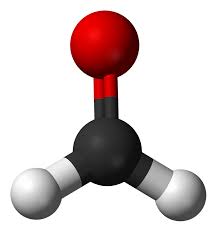
Formaldehyde (chemical formula: CH₂O, also written as HCHO) is a colorless, volatile organic compound (VOC) with a strong, pungent odor used in the manufacture of numerous building products and consumer goods.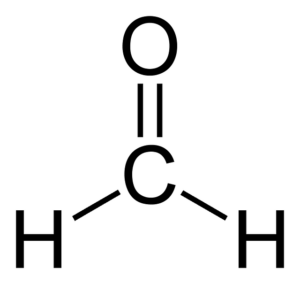
Chemical structure of formaldehyde
Common sources include:
- Engineered wood products
- Particleboard
- Medium-density fiberboard (MDF)
- Cabinets and furniture
- Flooring materials
- Adhesives and coatings
- Insulation products
- Textiles
Common Sources of Formaldehyde in Building Materials
- New cabinets
- Engineered wood products
- Composite flooring systems
- Laminate products
- Insulation materials
Household Products
- Cleaning chemicals
- Paints and coatings
- Air fresheners
- Fabric treatments
Combustion Sources
- Tobacco smoke
- Gas appliances
- Wood-burning fireplaces
- Candles
Higher temperatures and humidity levels may increase off-gassing rates.
Potential Health Effects of Formaldehyde Exposure
Short-term exposure may cause irritation of the eyes, nose, throat, and skin, as well as headaches, coughing, wheezing, and other respiratory symptoms. Some individuals may also experience burning or watery eyes, a sore throat, or worsening asthma symptoms. Sensitivity varies, and some people may experience symptoms at lower concentrations than others.
Long-term occupational exposure has been associated with persistent respiratory irritation and an increased risk of certain health effects in workers with prolonged exposure to elevated formaldehyde concentrations. Formaldehyde is classified as a known human carcinogen by the International Agency for Research on Cancer and the National Toxicology Program based primarily on evidence from occupational studies involving long-term, higher-level exposures.
Formaldehyde Exposure Guidelines
Several organizations have established exposure guidelines for formaldehyde.
| Organization | Exposure Guideline | Basis |
|---|---|---|
| FEMA (Manufactured Housing) | 0.016 ppm | Recommended indoor level |
| NIOSH | 0.016 ppm (Ceiling) | Occupational ceiling limit |
| HUD | 0.40 ppm | Manufactured housing standard |
| OSHA PEL | 0.75 ppm (8-hour TWA) | Occupational permissible exposure limit |
| OSHA STEL | 2.0 ppm (15-minute STEL) | Occupational short-term exposure limit |
| U.S. EPA | No federal residential standard | EPA does not establish a residential indoor air standard for formaldehyde |
These values were developed for different purposes and should not be interpreted as equivalent residential standards.
Why New Homes Sometimes Have Higher Formaldehyde Levels
Newly constructed or recently renovated homes and buildings may experience elevated indoor formaldehyde concentrations due to emissions from new building materials and furnishings. Common sources include:
- New cabinetry and built-in furniture
- Engineered wood products and composite materials
- New flooring, including laminate and vinyl products
- New furniture and upholstered furnishings
- Fresh paints, coatings, adhesives, and sealants
- Reduced ventilation during initial occupancy
- Warm temperatures and elevated indoor humidity, which can increase off-gassing rates
In most cases, formaldehyde emissions gradually decline over time as building materials age and indoor spaces are adequately ventilated. However, some composite wood products and furnishings may continue to release measurable amounts of formaldehyde for several years.
How Formaldehyde Testing Is Performed
Professional formaldehyde evaluations may include one or more of the following methods, depending on the objectives of the investigation.
Direct-Reading Instruments
Portable direct-reading instruments provide immediate measurements during an on-site inspection. These instruments can help identify potential emission sources, evaluate room-to-room variations, and assess the effectiveness of ventilation.
Passive Air Sampling
Passive badges or diffusion tubes collect air samples over a specified sampling period. The samples are then submitted to an accredited laboratory for quantitative analysis.
Active Air Sampling
Sampling pumps draw a measured volume of air through specialized media, providing accurate, time-weighted measurements for laboratory analysis. This method is commonly used for occupational exposure assessments and more detailed indoor air quality investigations.
Laboratory Analysis
Air samples are analyzed by an accredited laboratory using validated analytical methods to provide accurate, defensible results suitable for indoor air quality investigations, real estate transactions, occupational evaluations, and legal matters.
In addition to measuring formaldehyde concentrations, a comprehensive evaluation typically includes an assessment of temperature, relative humidity, ventilation, potential emission sources, occupant concerns, and building operating conditions to help identify factors contributing to indoor formaldehyde levels.
When Formaldehyde Testing Should Be Considered
Testing may be appropriate when:
- Occupants experience unexplained irritation symptoms.
- A home has recently been built or renovated.
- New cabinets or flooring have been installed.
- Manufactured housing is involved.
- Indoor air quality complaints have been reported.
- A real estate transaction is pending.
- Environmental litigation requires documentation.
Frequently Asked Questions
What level of formaldehyde is considered safe indoors?
There is no universally accepted residential standard. Many indoor air quality professionals recommend maintaining concentrations as low as reasonably achievable.
Does formaldehyde have an odor?
Yes. Formaldehyde typically has a sharp, pungent odor that some individuals can detect at relatively low concentrations.
Can opening windows reduce formaldehyde levels?
In many cases, increased ventilation can help reduce indoor concentrations.
Will formaldehyde eventually disappear?
Most building products release lower amounts over time, although emissions may continue for years depending on the material.
Conclusion
Formaldehyde remains one of the most common indoor air contaminants encountered in residential and commercial environments. Professional testing can help identify sources, quantify concentrations, and provide recommendations for reducing exposure and improving indoor air quality.
Expert Witness and Litigation Support
Formaldehyde and indoor air quality issues are sometimes involved in real estate disputes, construction defect claims, personal injury litigation, occupational exposure cases, insurance matters, and other legal proceedings. Stuart D. Bagley, MS, CIH, CSP provides expert witness consulting, technical document review, exposure assessments, and scientifically supported opinions for attorneys, insurance companies, businesses, and property owners nationwide. See our Expert Witness page for details on litigation support. ⚖️.
About the Author
Stuart D. Bagley, MS, CIH, CSP is a Certified Industrial Hygienist and Certified Safety Professional with more than 30 years of experience in industrial hygiene, indoor air quality, EMF testing, occupational exposure assessment and expert witness consulting. He is a former US OSHA Compliance Officer .